A business needs to be discoverable. People need to know what it does, who it helps and why they should trust it.
None of that requires its owner to turn themselves into a daily source of content.
Yet the usual advice often treats the two as inseparable. Build an audience first. Share more of your life. Put your face on everything. Become the personality people follow before you are allowed to sell the work you are actually good at.
Personal brands can work extraordinarily well. Some founders enjoy publishing their ideas and being closely associated with what they sell. That is a legitimate choice.
It is not an entry requirement for ownership.
For some people, being publicly visible feels like exposure. Others could do it but would rather spend that energy on the offer, the delivery, the team or the difficult problem nobody notices until it has been solved.
Both groups still need to find customers and earn trust. They simply need a business whose growth does not require its owner to perform for an audience every day.
The Operator already exists
There is a kind of person who looks at a repeated task and sees an unfinished system.
They notice the handover that causes confusion, the missing check that creates rework and the tool everyone pays for but nobody uses properly. They want to know why a result happened and whether it can be produced again.
That person is an Operator.
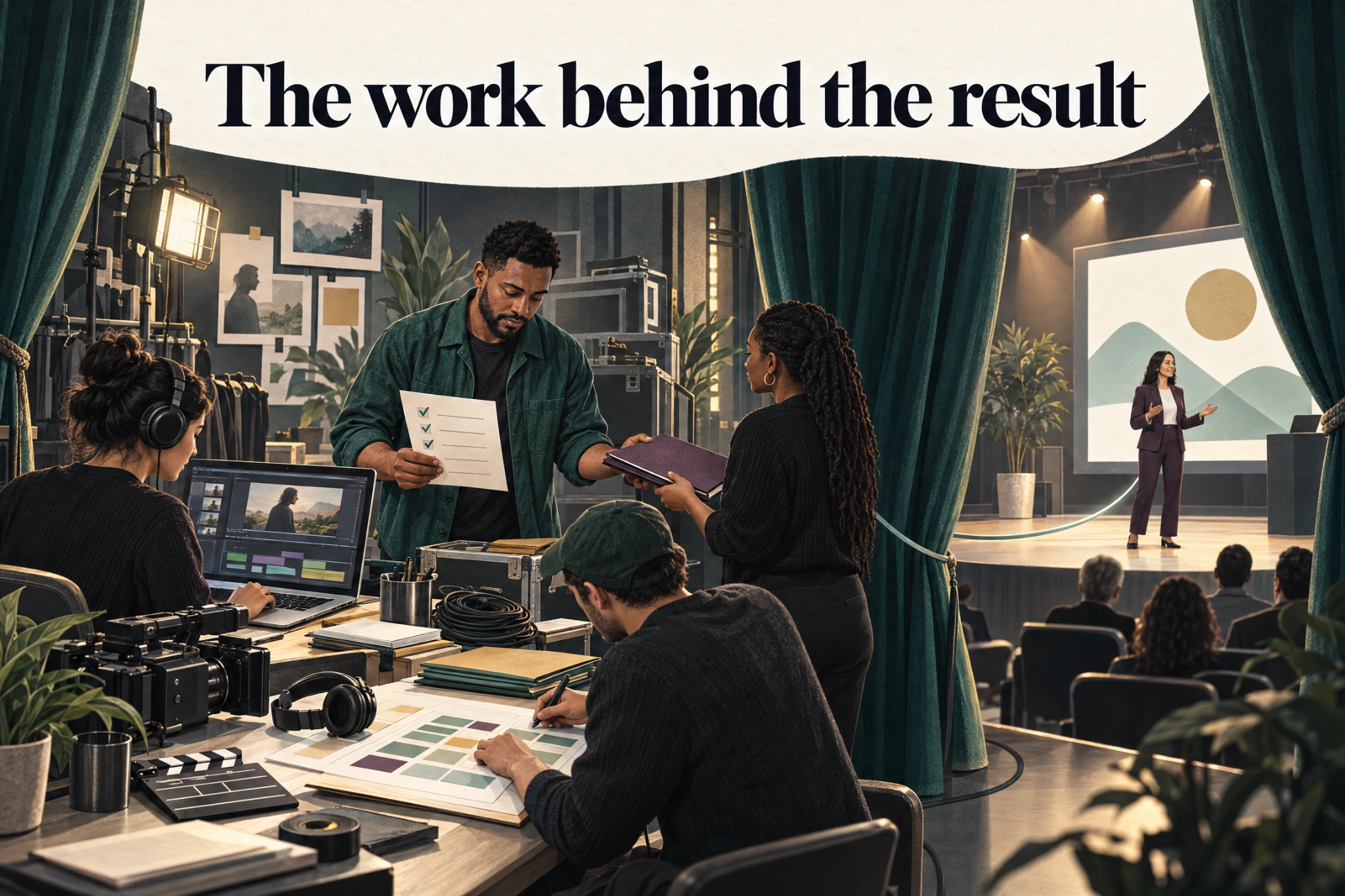
The result can be visible without the person organising the work becoming the main attraction.
Operator is not a job title or a revenue level. It describes an approach to work: understand what creates the result, improve the method and make it less fragile.
Operators may be employed, freelancing or running a young company. They can already think in systems while still doing nearly all the work themselves.
Mindset alone does not change the structure of a business.
A freelancer can deliver excellent work and still have their ability to earn trapped in their own hours. An Operator looking to build a business asks what could persist beyond the next invoice.
Can the result be defined clearly enough to sell again? Can the method be taught? Can the proof strengthen a company’s reputation? Can another capable person carry part of the outcome? Can customers buy from the business without depending on the founder’s public persona?
Those questions mark the beginning of the move from skilled individual to owner of an asset.
The Second Chair Business
We call the vehicle an Operator builds a Second Chair Business.
A Second Chair Business makes the business of support your business. You take the skills developed helping someone else succeed and build your own company around delivering that support.
You might know how to produce content, run advertising, manage delivery, hire well or connect the systems that keep a company working. Instead of supplying that capability only as an individual inside someone else’s operation, you build a company that can provide it to clients.
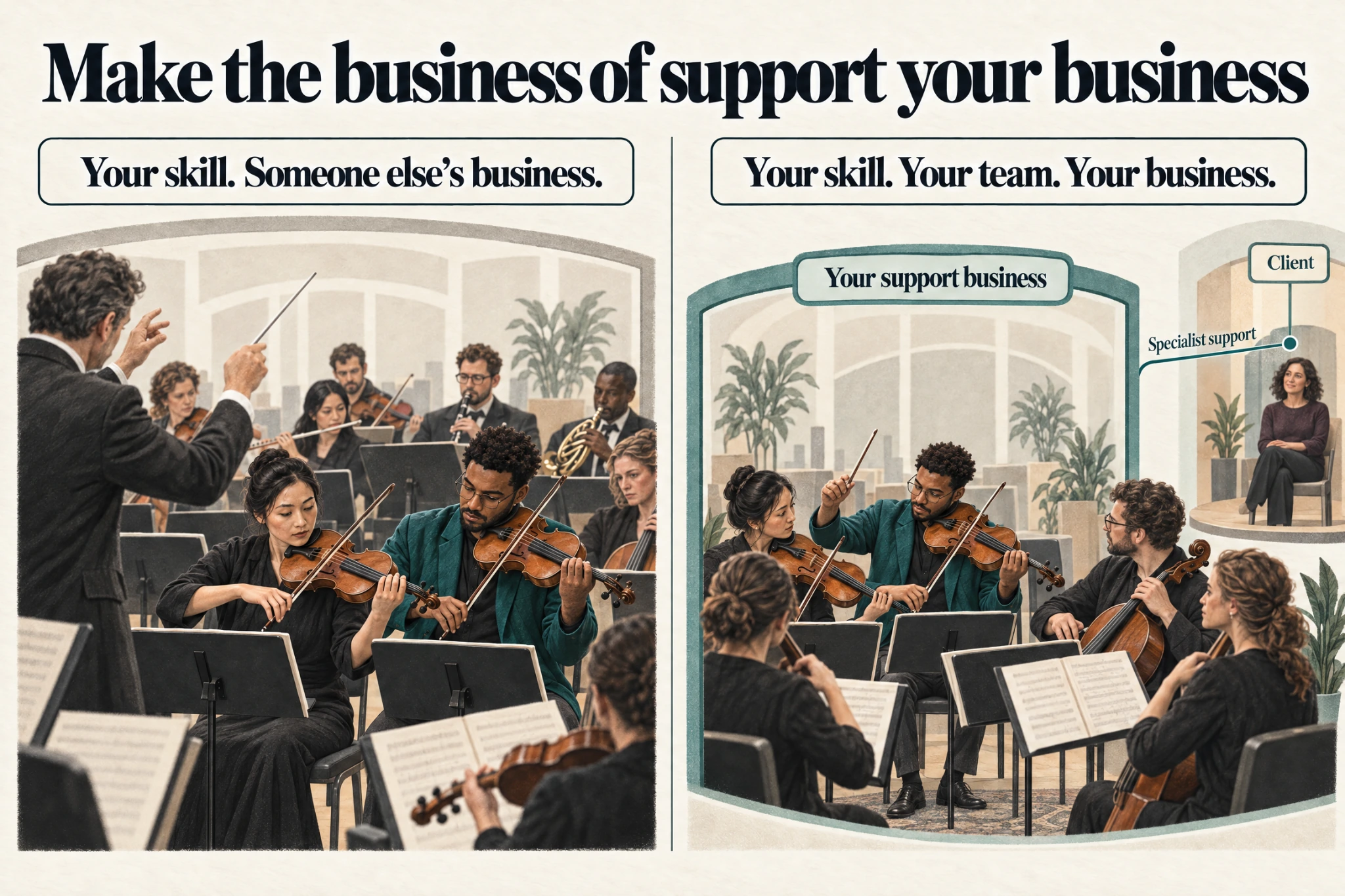
Your company supports the client. You own and lead the company providing that support.
That changes your role. You choose the offer, set the standards, organise the people and direct the process. In the orchestra metaphor, you become the conductor of your own operation, even while you are still playing within it.
“Second Chair” describes the capability the business is built around. It does not mean its owner must remain subordinate.
Content Buddy is my example. Our clients bring the expertise they want to share. Content Buddy provides the production operation around it. I am building the team and processes that deliver that support across clients, under a brand we own.
The aim is to build a company whose reputation grows from the quality and evidence of its work, rather than requiring its owner to perform continually for an audience. Over time, the company retains an offer, customer relationships, a delivery method, proof and a team capable of carrying more of the work.
The owner can still write, sell, teach, speak to customers or appear publicly. They can have a visible company brand. The distinction is that their personality is not the only thing the company sells or the only reason customers trust it.
Build the asset. Do not become the asset.
Owned Ground and Borrowed Ground
Every business uses things it does not own. Social platforms, software, contractors and referral partners can all be valuable. Problems begin when a borrowed part is mistaken for the foundation.
If every customer relationship exists on a platform you cannot reach beyond, the relationship is exposed. If only one person knows how delivery works, the process is exposed. If enquiries arrive only when the founder has time to post, demand is exposed.
Borrowed Ground is not forbidden. It needs to be recognised.
James Schramko calls his approach “Own the Racecourse”: use outside channels to bring people back to a base you control, including your website, email database and content archive.
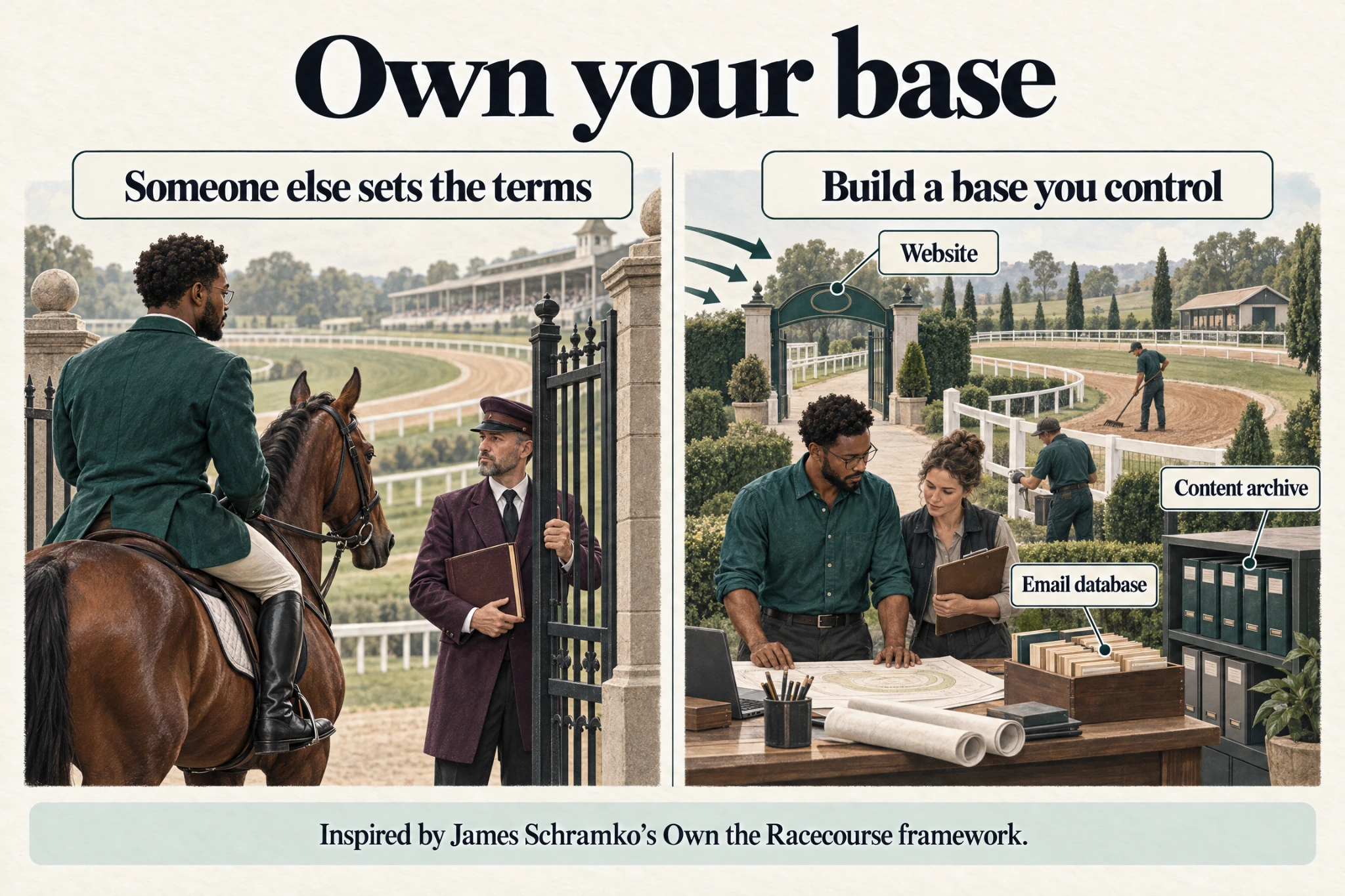
Inspired by James Schramko’s Own the Racecourse framework. For BYOB, the question extends to the methods, relationships and delivery capability the business retains.
Owned Ground grows when the business retains something from each cycle of work: clearer positioning, direct relationships, proof, knowledge, documented decisions and delivery capability it can keep improving.
Owning these things does not mean never depending on anyone else. It means understanding what you control, where you are vulnerable and what you are building to reduce that vulnerability.
At the start, a Second Chair Business may depend heavily on its founder. Reduced dependence is the standard it grows towards, not a claim it makes on day one.
The next question is how to make that transfer real. How does a skill that lives in one person’s hands become a business that can produce the outcome again?