Why is this happening?
What do we do next?
Those questions sound simple until a client leaves, a hire misunderstands the work or enquiries slow down. When nobody can explain what changed, every surprise becomes an emergency.
The Operator Standard is a working test:
Can we explain why a result happened, identify what we control and decide what to change next?
In grappling, a beginner can lose the same position again and again without understanding why. A more experienced person may lose it too, but can often identify the grip or decision that gave the position away.
The loss still counts. It also leaves them with something useful for the next round.
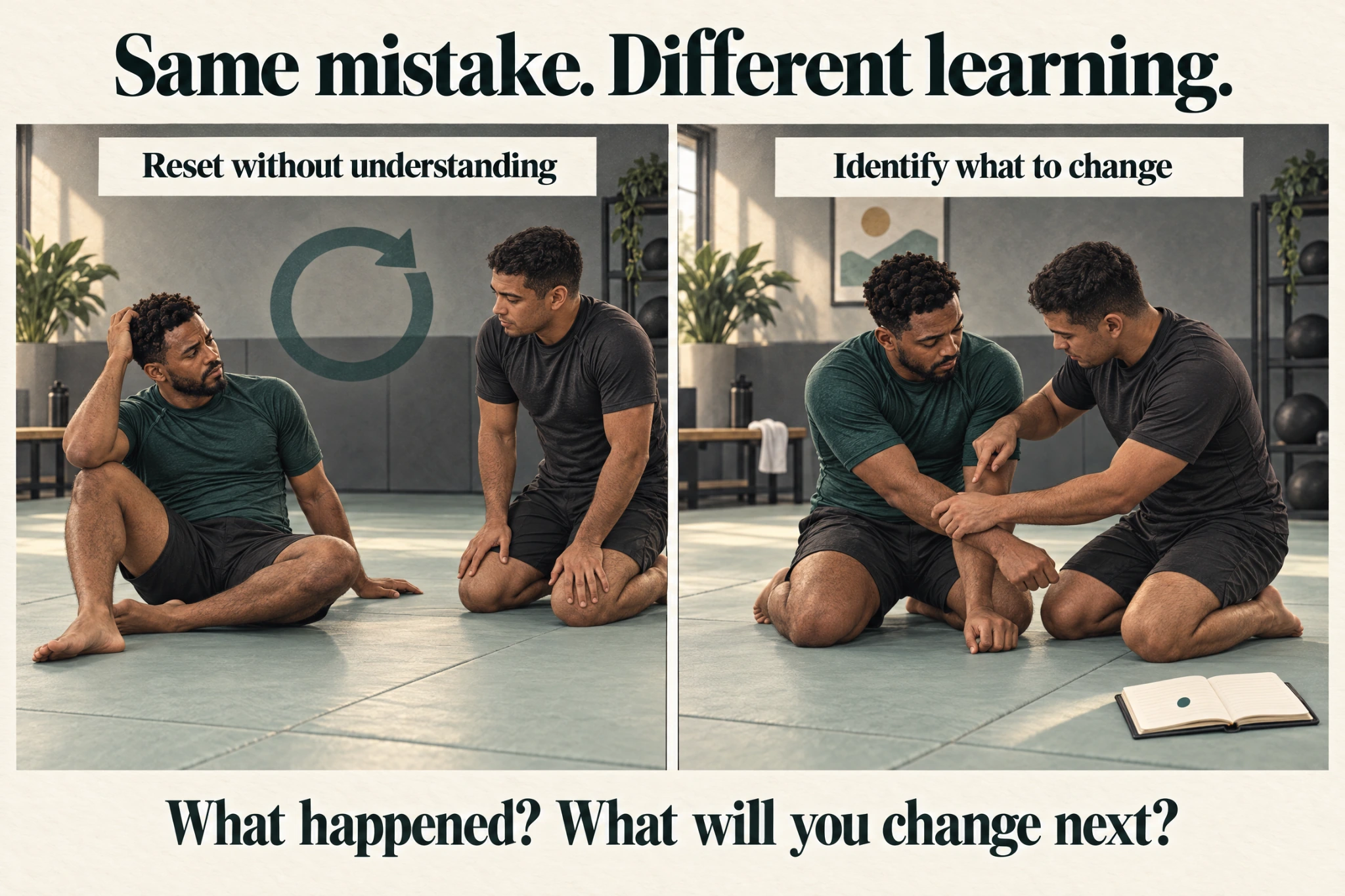
The difference is what you learn from the mistake and change before the next attempt.
A campaign that brought in a client can teach you nothing if you never examine how that client found you and why they bought. A failed handover can teach you nothing if the explanation stops at “the hire wasn’t good enough.”
Activity does not compound by itself. Learning can, when it changes the system.
Three questions about ownership
I understood the systems I built for other companies. I did not control what happened to them or own the businesses that benefited. So “if you understand it, you own it” would be the wrong lesson from my story.
Ask three separate questions instead:
Do we understand it? Can we explain what produces the result and what tends to break it?
Can we influence it? Can the business change the offer, process or channel when the evidence calls for it?
What do we retain? After this work is delivered, what capability, relationship, proof or asset remains with the business?
The answers do not have to be perfect. They should become clearer as the business matures.
A direction, not a badge
There are times when I drift: something fails, I react, and a new tactic looks easier than examining the old one. There are times when I build: I test, document and correct. And there are parts of Content Buddy where the team can already produce a result through a process we understand.
Drifter, Builder and Operator are useful descriptions of how we behave around a particular problem. They are not permanent ranks. You can be confident in delivery and still be a beginner in acquisition. I am.
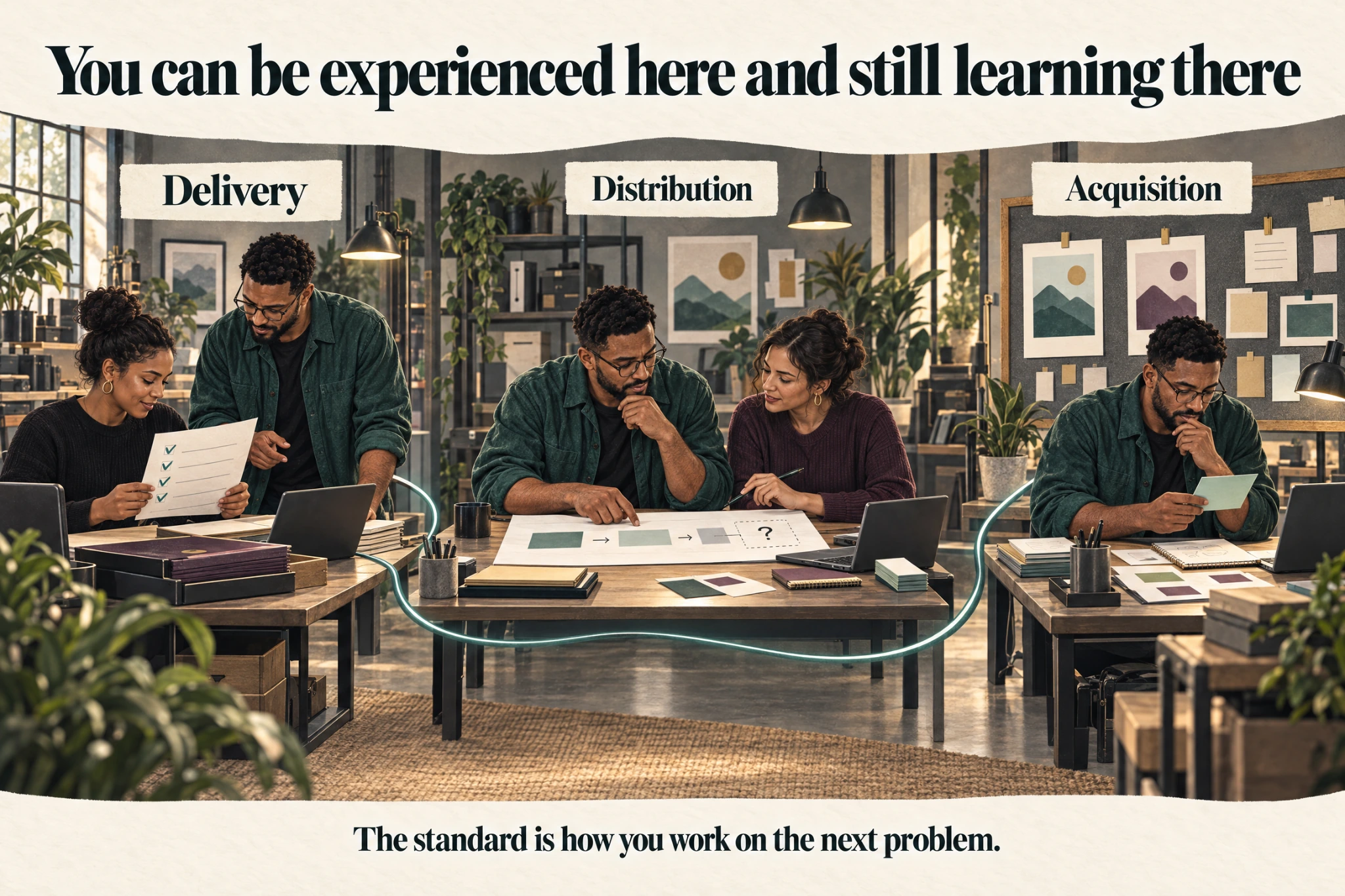
Different parts of the same business can be at different stages. The standard is how you approach the next problem.
The point is to make the work leave more behind each time: a better offer, a clearer decision, an improved handover, a stronger relationship, a process someone else can run.
If you have spent years doing essential work inside somebody else’s business, those years need not have been wasted. Your skills and judgement can travel with you, even when the company assets cannot.
The question is what you will build from them now.
Not a promise that every process will run without you. A series of deliberate moves from work that pays once towards a business that can keep and develop the value it creates.
Come and see what we build
If you have read this far, thank you.
You did not need another person telling you to work harder or post more. You needed a clearer answer to a question you may have been carrying for years: what will all this work leave behind?
For me, that question is no longer theoretical. Content Buddy serves clients. Its production team and checks are taking shape. Distribution is being documented. Acquisition still needs to become more reliable.
I could wait until every part worked beautifully and tell you the story afterwards. But the decisions between here and there are the part worth seeing.
What breaks when somebody else follows a process? Which attempt to find clients works? What do we change when it does not? When does a skill I personally sell become a capability the business can keep?
Those are the questions BYOB works through in the open.
Every week, I send the BYOB Brief: what we worked on, why we made the decision, what happened and what we learned. It follows Content Buddy and the businesses we build after it, including the parts that do not go to plan.
You may be building alongside me. You may still be employed and working out what you want to own. You may already have clients and be trying to move the work out of your own hands.
Wherever you are starting, you do not have to make yourself the product. You do have to decide what your work is building towards.
For a Second Chair Business, that means using the skills you developed supporting others to build a company you own and lead.
If a business known for the quality of its work sounds like one you want to build, come along. You can examine my decisions and take what is useful for your own.
Join the BYOB Brief and follow the build.
Tega