Robert Kiyosaki’s Cashflow Quadrant offers a useful distinction between being self-employed and owning a business.
Many people start a company and remain, in practical terms, self-employed. They replace a salary with invoices and an employer with clients. The work still waits for them personally. If they stop, delivery stops.
Self-employment can be a good choice and a necessary stage. The distinction matters because it tells us what still has to be built.
In the Business Owner quadrant, people and systems produce more of the result. The owner may remain deeply involved, particularly in strategy, relationships and decisions. But every useful outcome does not require their direct labour.
That is the destination for a Second Chair Business, not its starting condition.
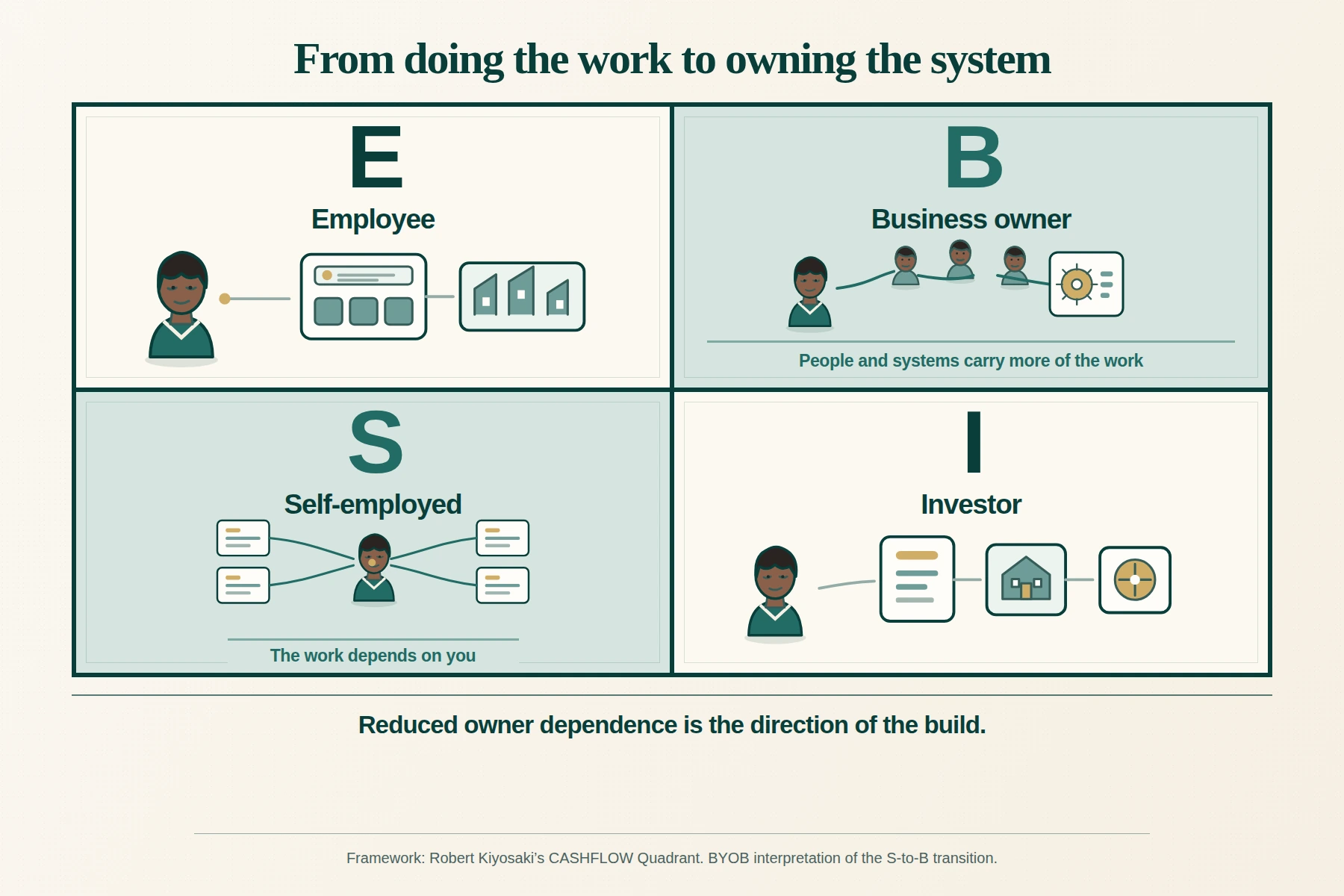
Framework: Robert Kiyosaki’s CASHFLOW Quadrant. BYOB applies the S-to-B distinction to building a support business: you lead the operation while people and systems carry more of its delivery.
The quadrant names the destination. The three transfers below are how I am working towards it in Content Buddy.
From skill to a repeatable outcome
Most freelancers sell access to what they can do: editing, copywriting, design, advertising, operations, automation. The client hires a person to complete a task.
A business makes a clearer promise. Who needs the result? What does the work produce for them? Which parts of the method are consistent enough to deliver across clients?
Content Buddy began with video editing, but a client does not really need a collection of isolated edits. They need a dependable way to turn their expertise into content, review it and get it in front of the right people. The specialist skills remain. They now serve an outcome the business can organise around.
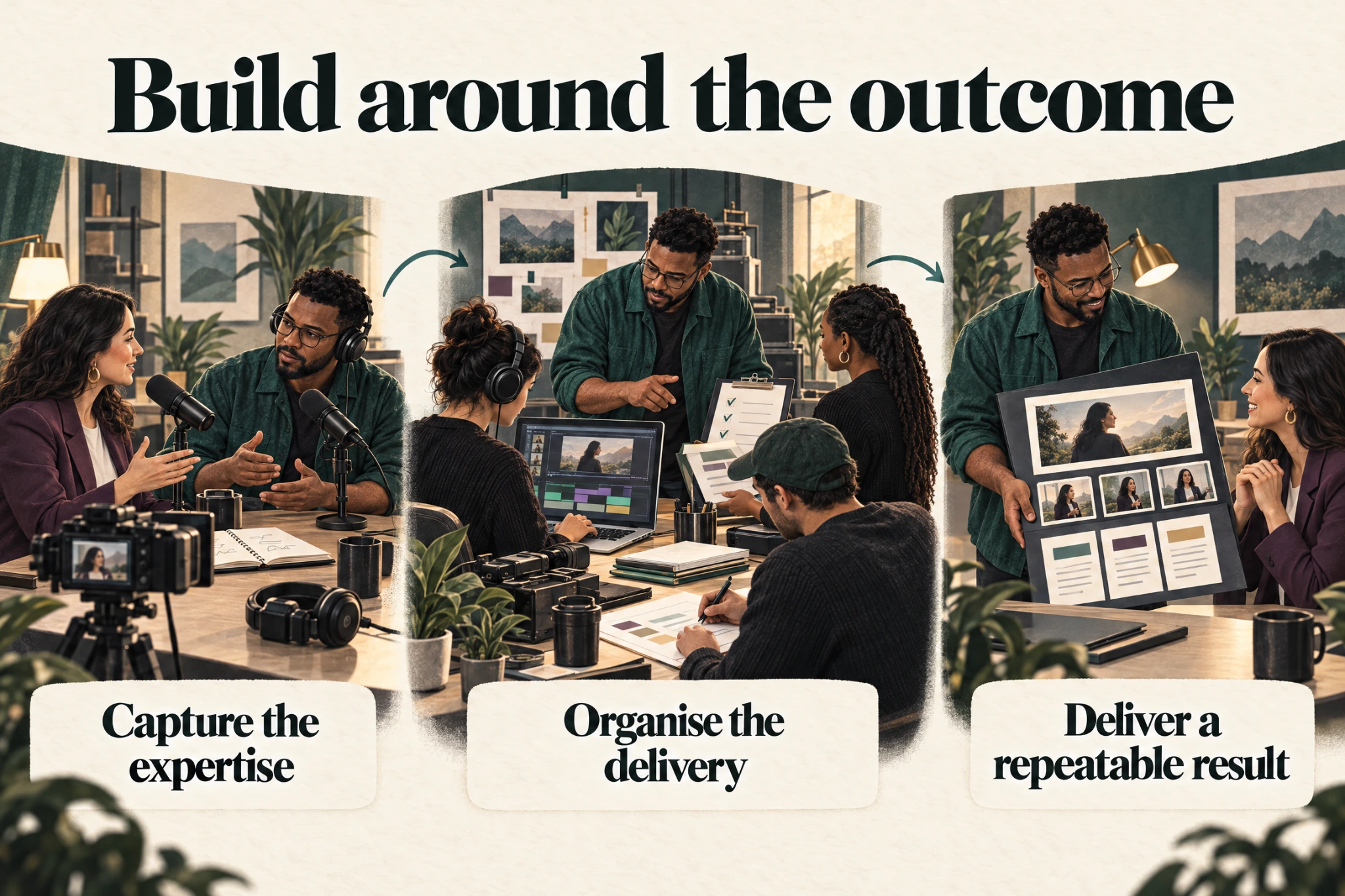
The offer defines the result. The business organises the skills needed to produce it.
From the owner’s hands to a delivery process
Early on, many decisions live in the founder’s head. They spot quality problems, know what to ask a client and make small corrections without noticing that they have made them.
To transfer that capability, they need to make the work observable. What happens first? What information is required? What is acceptable? Who checks it? What happens when the client asks for changes?
The documentation will have holes. Another person following it is often how those holes become visible. Each correction gives the business a stronger process instead of forcing the founder to answer the same question indefinitely.
Content Buddy has made part of that transfer. A team handles much of the production and editing. Work goes through internal quality control before the client sees it. The client gives feedback, changes are made and the content moves towards approval.
Distribution is still being documented. I am working through the first cycles, then handing the steps over so the team can follow them, identify what is missing and improve the procedures. That handover is work in progress.
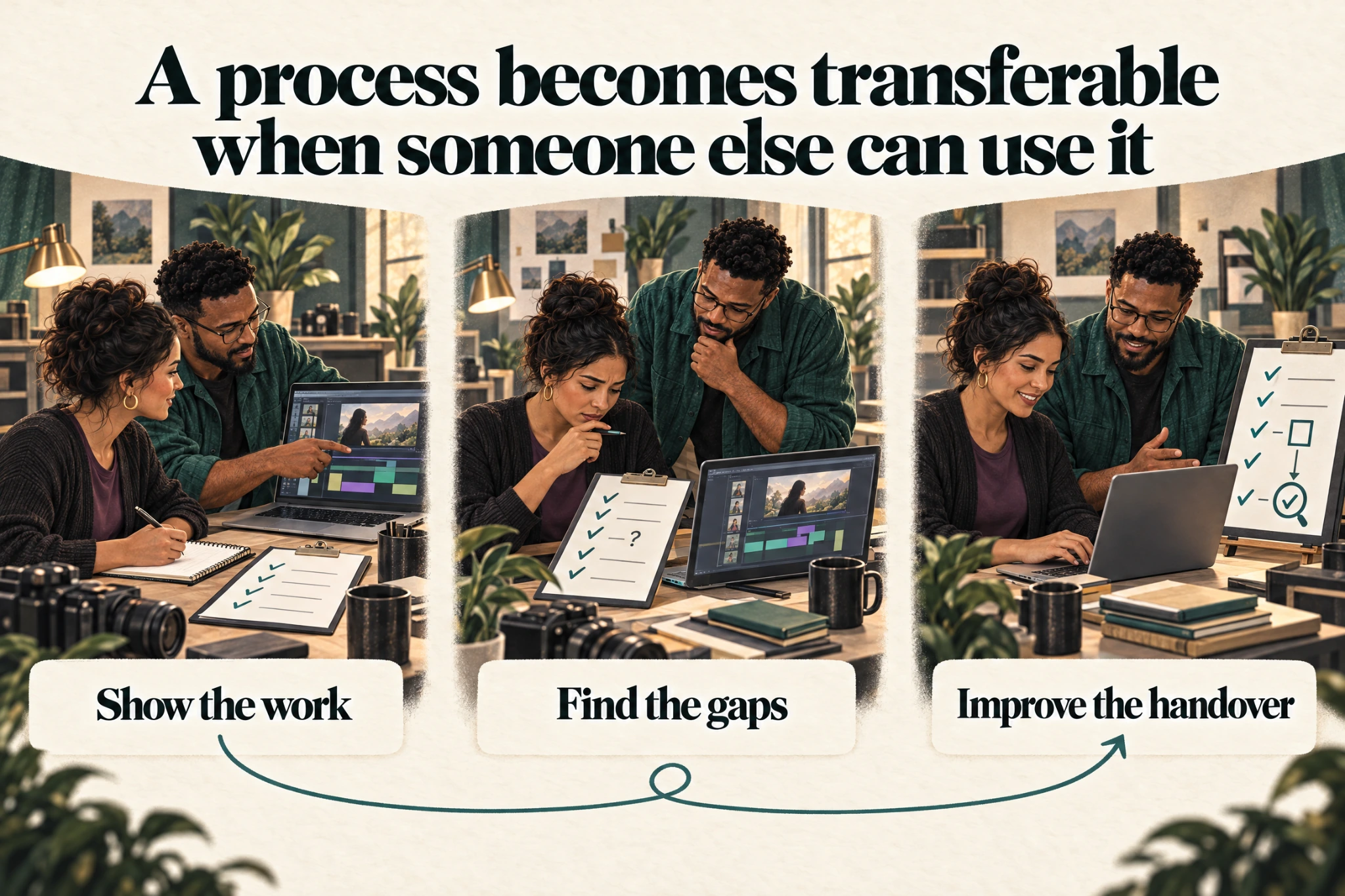
Show the work, test the instructions with another person, then fix the gaps their attempt reveals.
From occasional enquiries to a way to create demand
A business can improve delivery and still have a fragile pipeline.
Referrals are valuable. So are content, partnerships, outreach and advertising. None becomes a dependable acquisition system merely by producing a customer once.
The business needs to understand where interest comes from, what helps someone decide and what to change when results slow. It can use channels it does not own, while building direct relationships and a way to follow up that it can control.
This is Content Buddy’s weakest transfer today.
I tested advertising. It produced a client, but I pulled back because the rest of the system was not ready for the demand I was trying to create. I am rebuilding the acquisition side through a VSL, waitlist, follow-up and advertising campaign. That work is underway. I cannot claim the finished result yet.
What the evidence actually shows
Content Buddy began when a client’s editor disappeared and production stalled. The immediate fix was to replace the missing capacity. The larger opportunity was to build a company that could deliver the outcome without relying on one person doing every task.
Over roughly three years, Content Buddy has served around twenty clients and reached about five thousand dollars a month at its peak. Those figures show that clients have paid for the work. They do not prove that acquisition is predictable or that the business runs without me.
The production team, client work and developing procedures show a transfer in progress. Distribution and acquisition show where that transfer remains incomplete.
This is what the journey from self-employed to business owner looks like while it is happening: make a promise, deliver it, find what only the founder can do, separate judgement from habit and move the repeatable work into the business.
Revenue alone will not tell you whether that is working. A larger team will not tell you either. You need a way to judge whether each cycle makes the business more capable or merely busier.